
It’s already August 2025 (though, in terms of the fiscal year, we’re still in the first half), and I’ve managed to accumulate quite a lot of photos.
One day in late June, in the vicinity of Tokyo, the lush greenery seemed to radiate a vibrant energy—a prelude to the full arrival of summer.
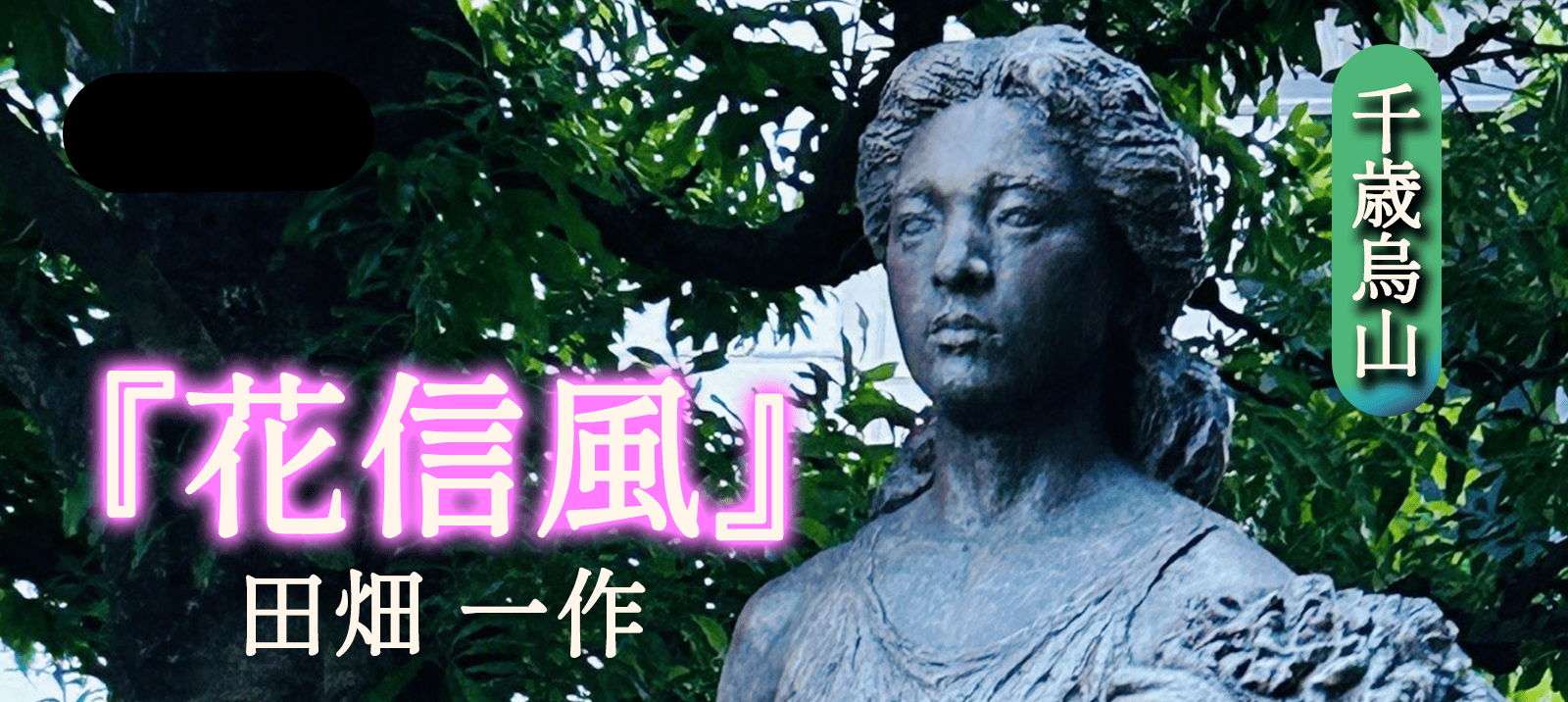
While in the area of Chitose-Karasuyama Station (Setagaya Ward) for work, I came across a statue of a young woman who seemed to embody a sense of “breeze.” She held a bouquet of flowers, and her youth was such that one might even call her a girl.
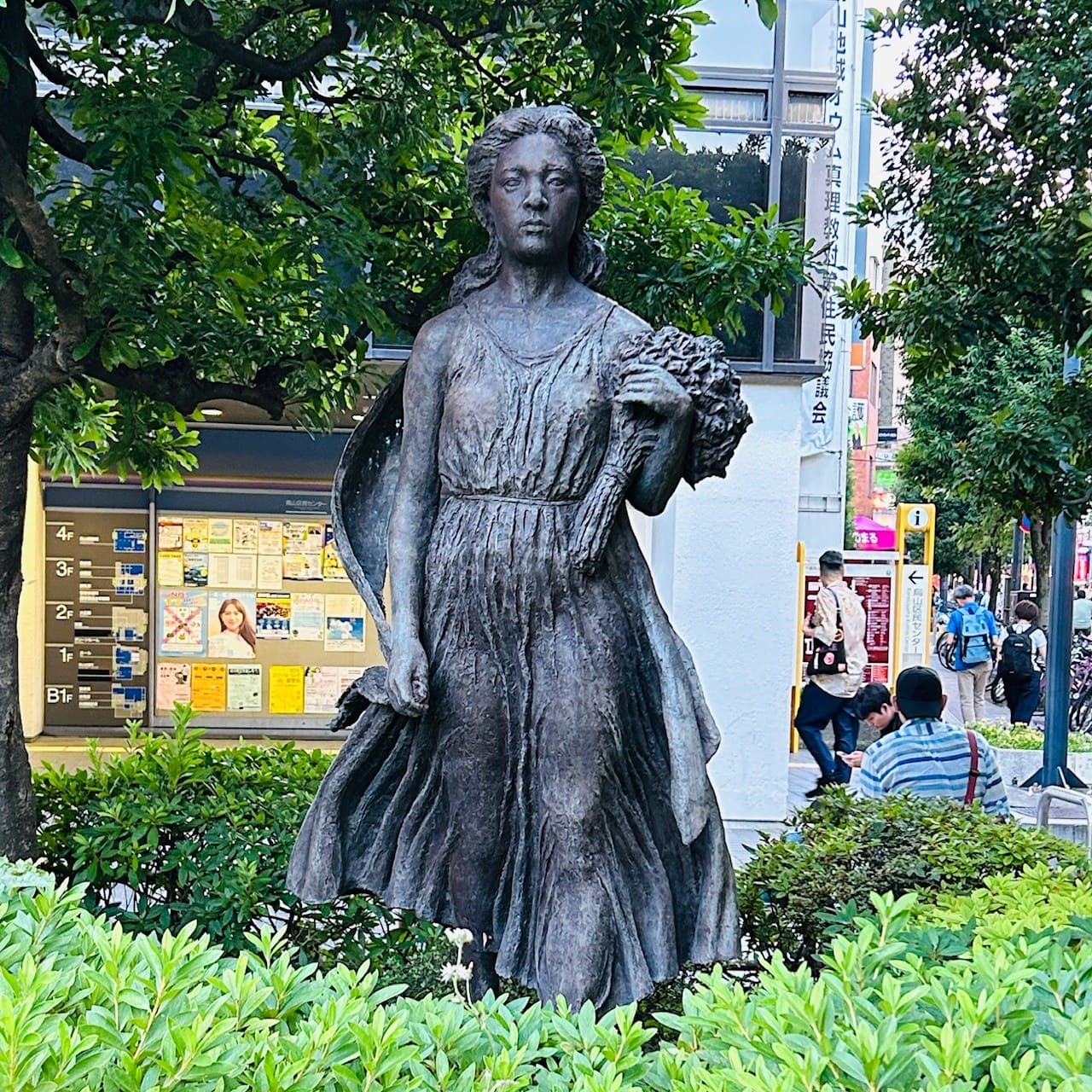
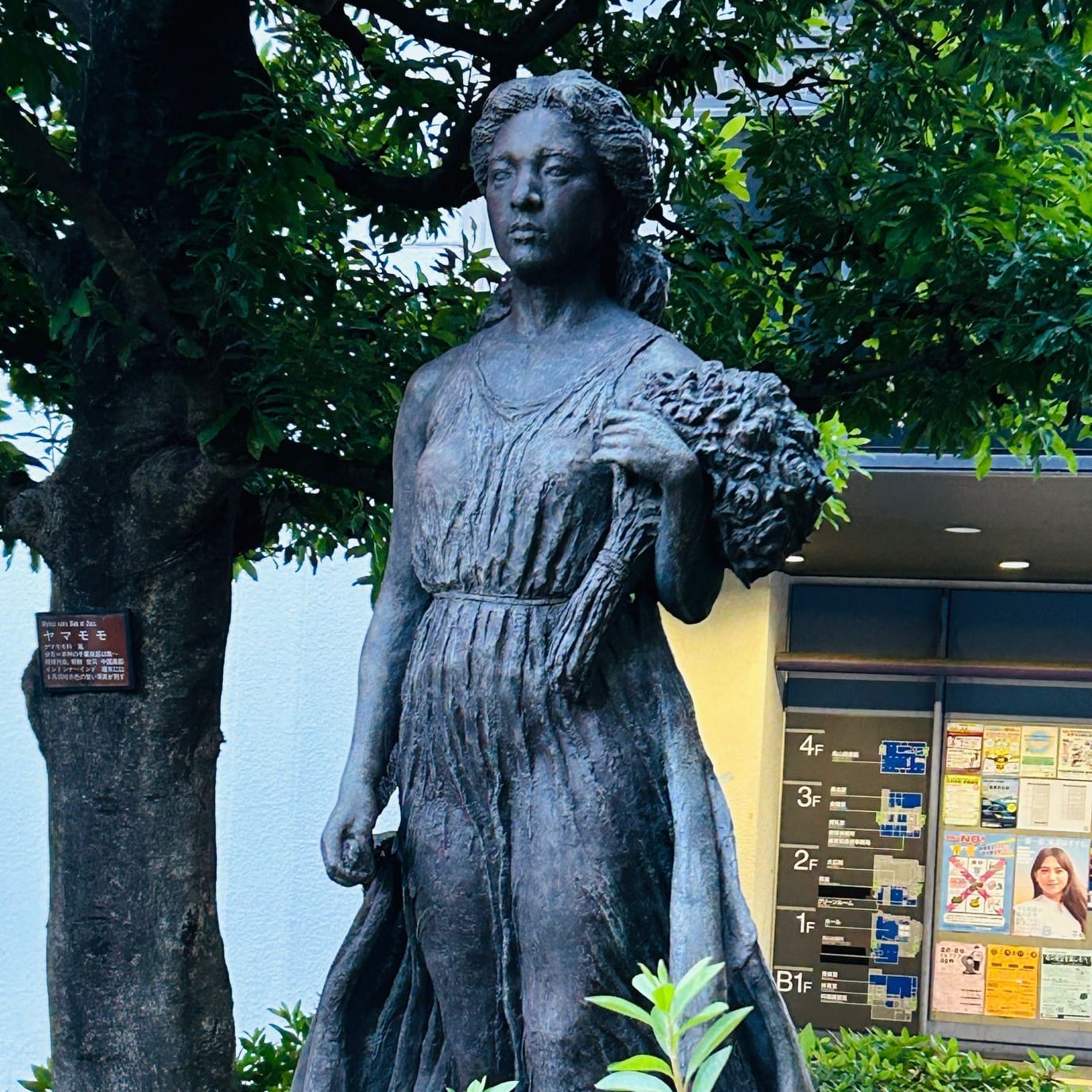
“Kashin-fu” (Winds Announcing the Flowers) – 1983 – Issaku Tabata
Kashinfū—a term I hadn’t encountered before—is defined in the Daijirin dictionary as “a breeze in early spring; a wind that heralds the arrival of the season when flowers bloom.” What a beautiful name for a breeze.
Although the sculpture is crafted from heavy material, it possesses a remarkable sense of lightness—seen in the folds of the skirt and, most notably, in the way the shawl, when viewed from the side, billows softly behind the woman’s back as if caught in a breeze. The artist’s skill is truly impressive. I am also struck by the realism of the heel, viewed from a rear-angled perspective; it looks as though it is imbued with living, circulating blood.
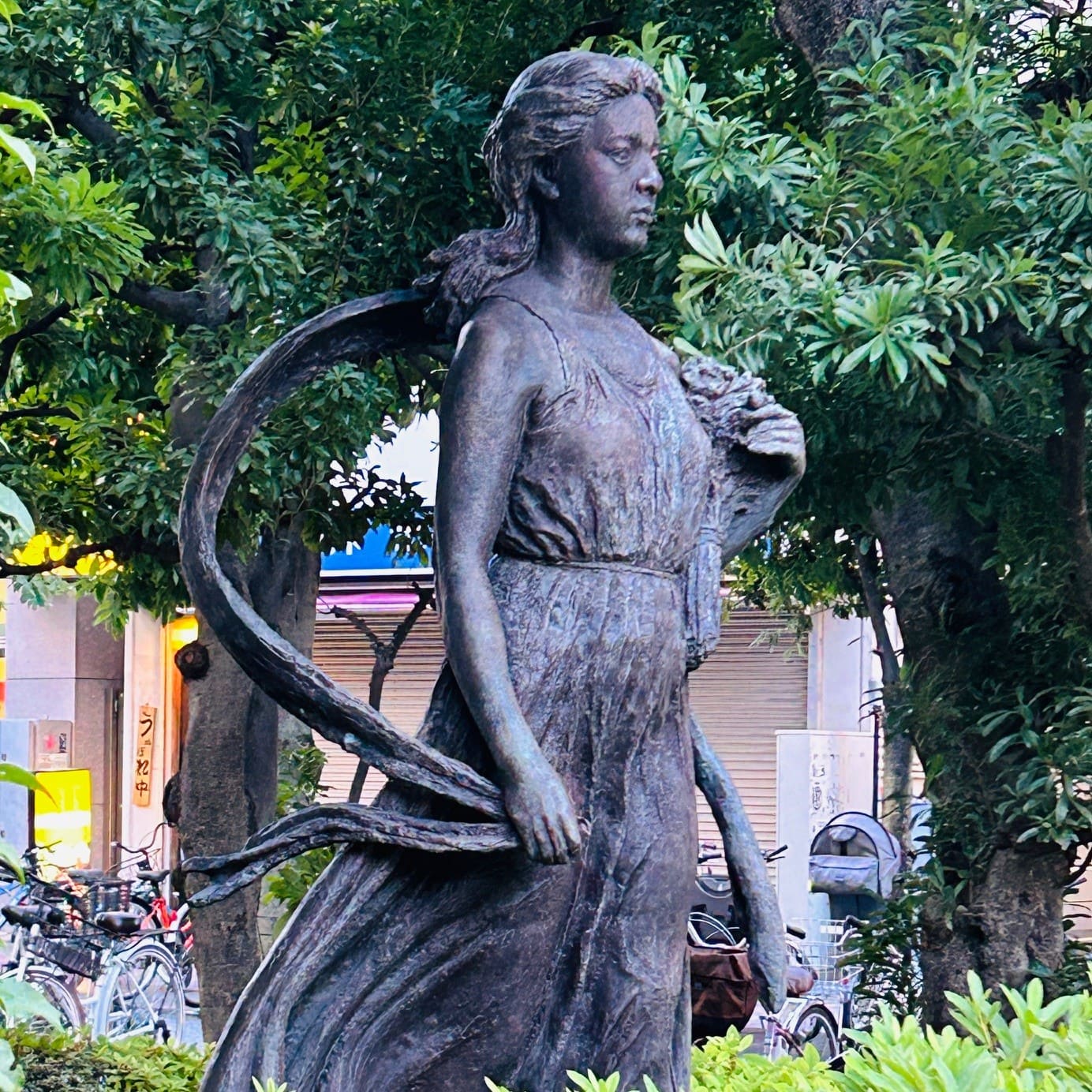
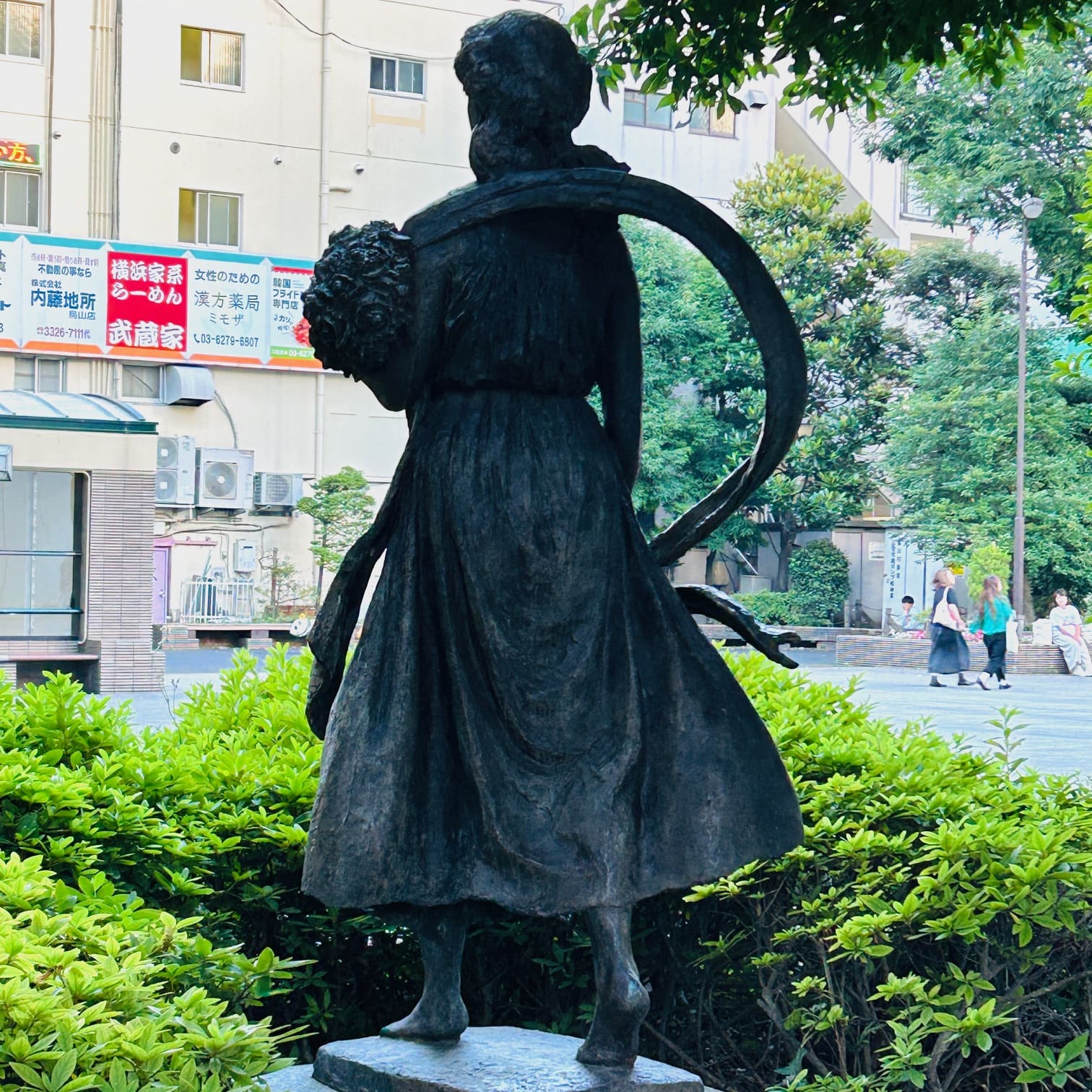
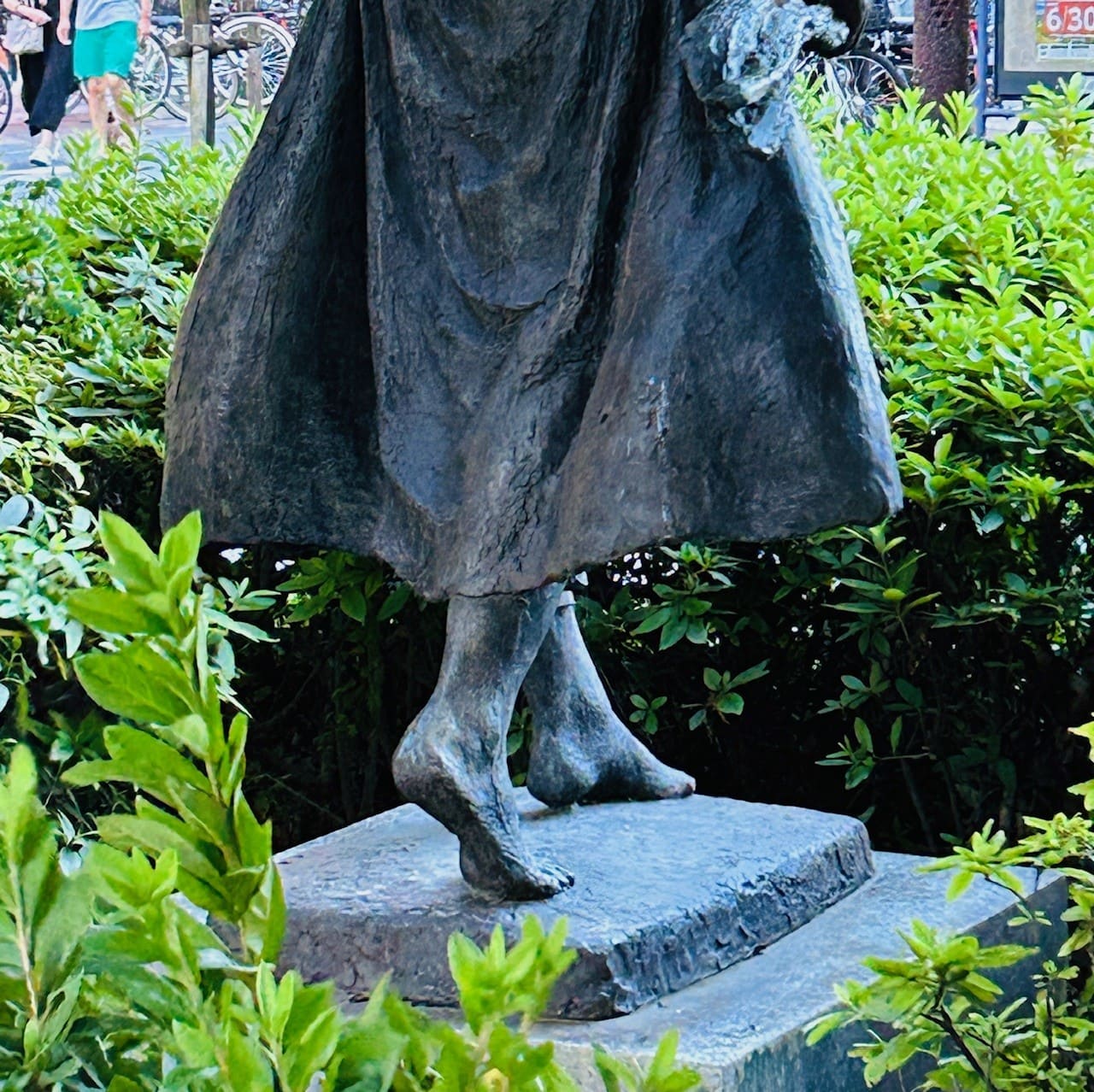
By the way, when it comes to three-dimensional art—if time permits—I highly recommend walking all the way around it. Viewing it from the sides and the back, rather than just from the front, allows you to fully appreciate its appeal.
The creator of this statue was Issaku Tabata, who was born in Kyoto in 1915 (during the Taisho era) and passed away in Setagaya Ward, Tokyo, in 1994. According to the Tokyo National Research Institute for Cultural Properties, he was the son of a nihonga (traditional Japanese-style) painter and had already set his sights on a career in sculpture by the time he finished middle school. With a long list of competition entries and awards to his name, he created numerous sculptures and gardens throughout Japan—as well as the Dr. Noguchi Memorial Garden in Ghana—leading a life that was, by all accounts, truly that of an artist. Wow—how impressive!
In creating public spaces that incorporate sculpture, the design process was guided by the motto: “Arrange the stones so that the grasses may flourish.” Aiming for works that would exist “like a flower that releases its fragrance when the wind blows,” I sought to create forms that harmonize with nature—much like plants that thrive in a state of balance between the earth and the vital energy of life.
(Cited from “Tabata Issaku,” Tokyo Research Institute for Cultural Properties)
Reading this, one finally understands why the wind circulates around the figure of the young woman, and why there is a pulse of blood in her heels. The artist’s soul will surely live on forever within this depiction of a woman.
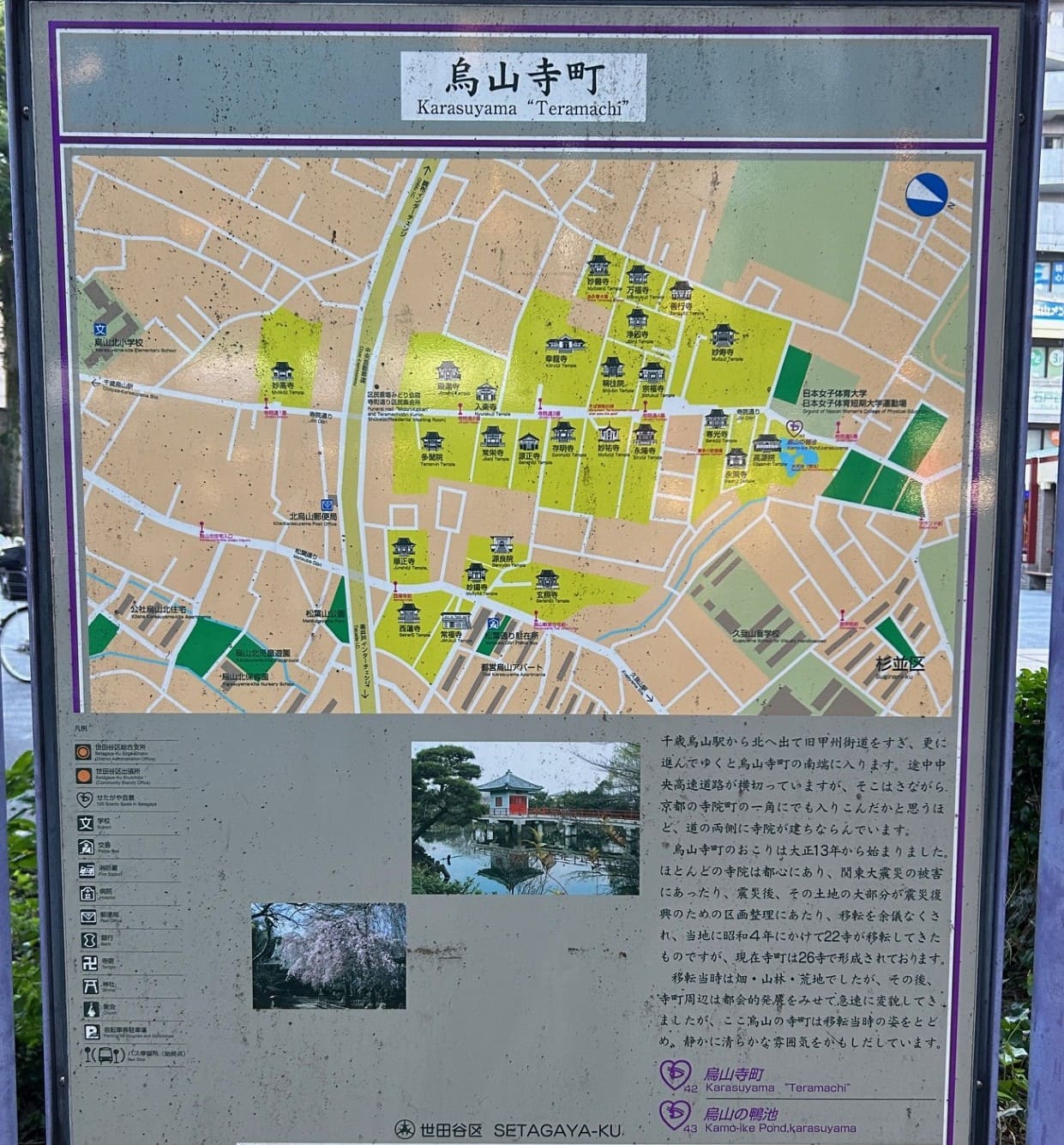
A final note for my own records:
Although I live in the same Setagaya Ward, this was my first time visiting Chitose-Karasuyama. A sign near the station revealed that the area is home to “Karasuyama Temple Town”—a place with a high concentration of temples.
The inclusion of the character “Karasu” (crow) in the place name likely has some specific origin; I’d like to look into that later and perhaps explore the temples themselves.

コメント