
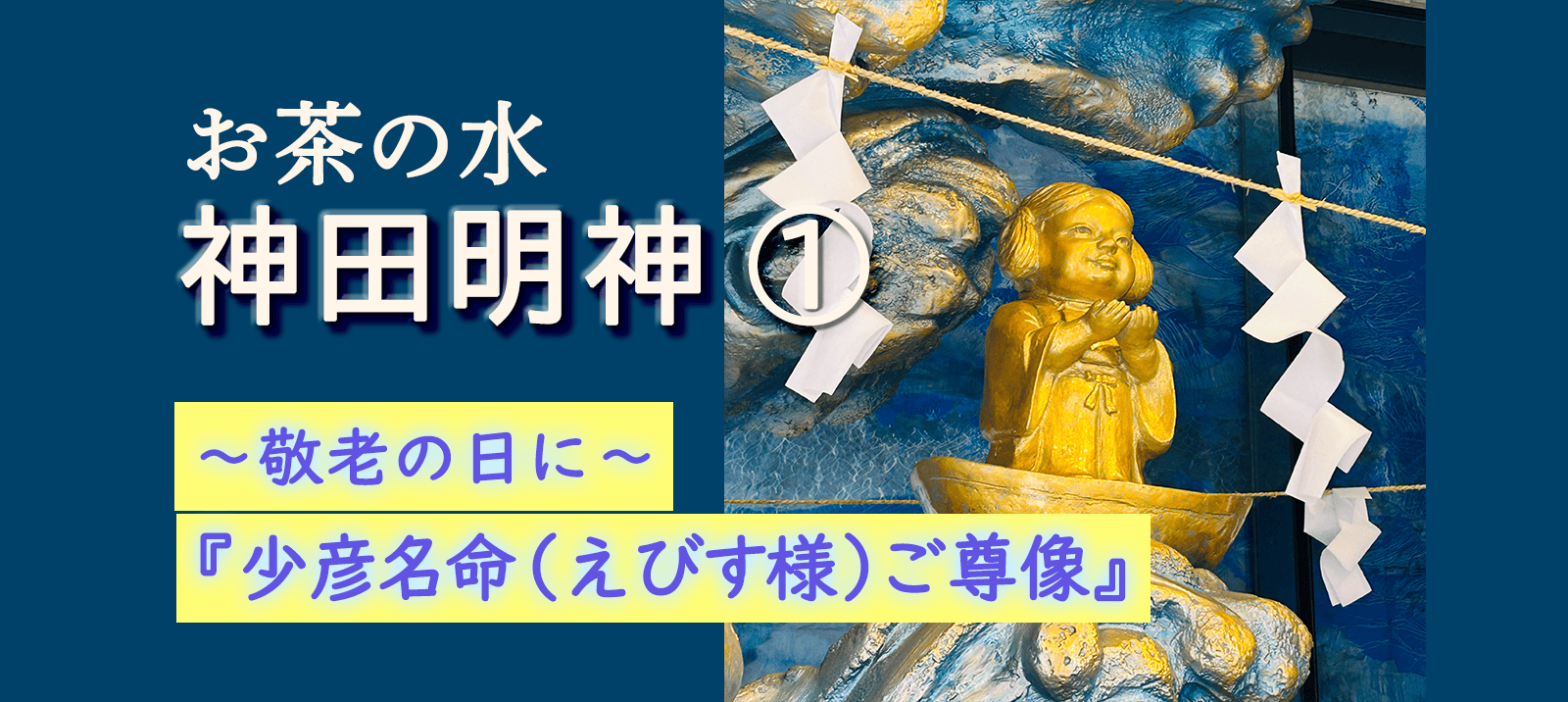
In honor of “Respect for the Aged Day,” I sent a short message to my mother back home via LINE this morning, accompanied by a few auspicious photographs.
Earlier this year, my mother fell down a flight of stairs, which led to her hospitalization—where an underlying medical condition was discovered, requiring surgery. Fortunately, the illness was caught early. She even joked that her time in the hospital—supported by such kind staff during her rehabilitation—was an “elegant hospital life.” However, now that she has returned home after nearly three months, she is finding that daily life comes with various challenges.
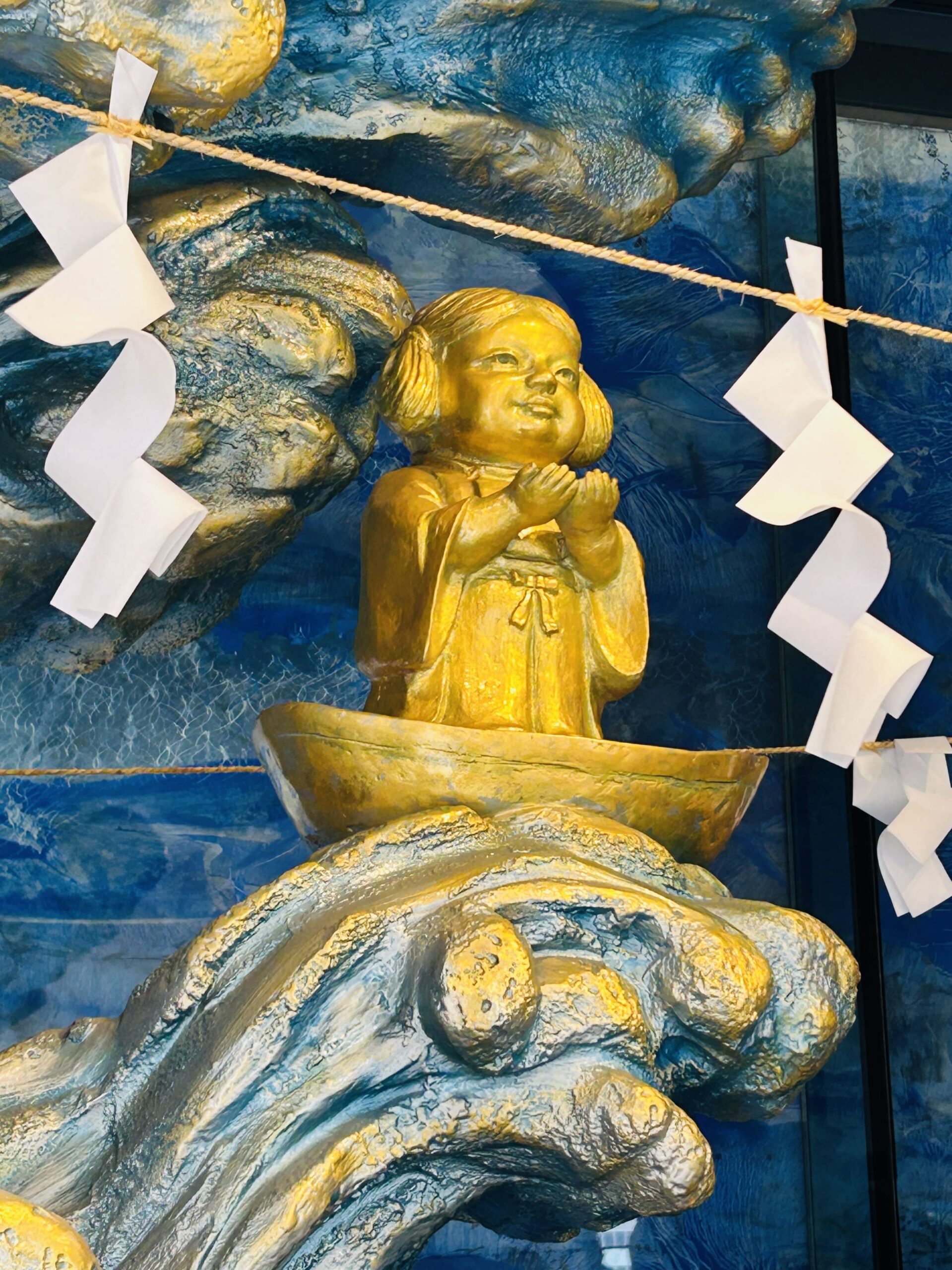
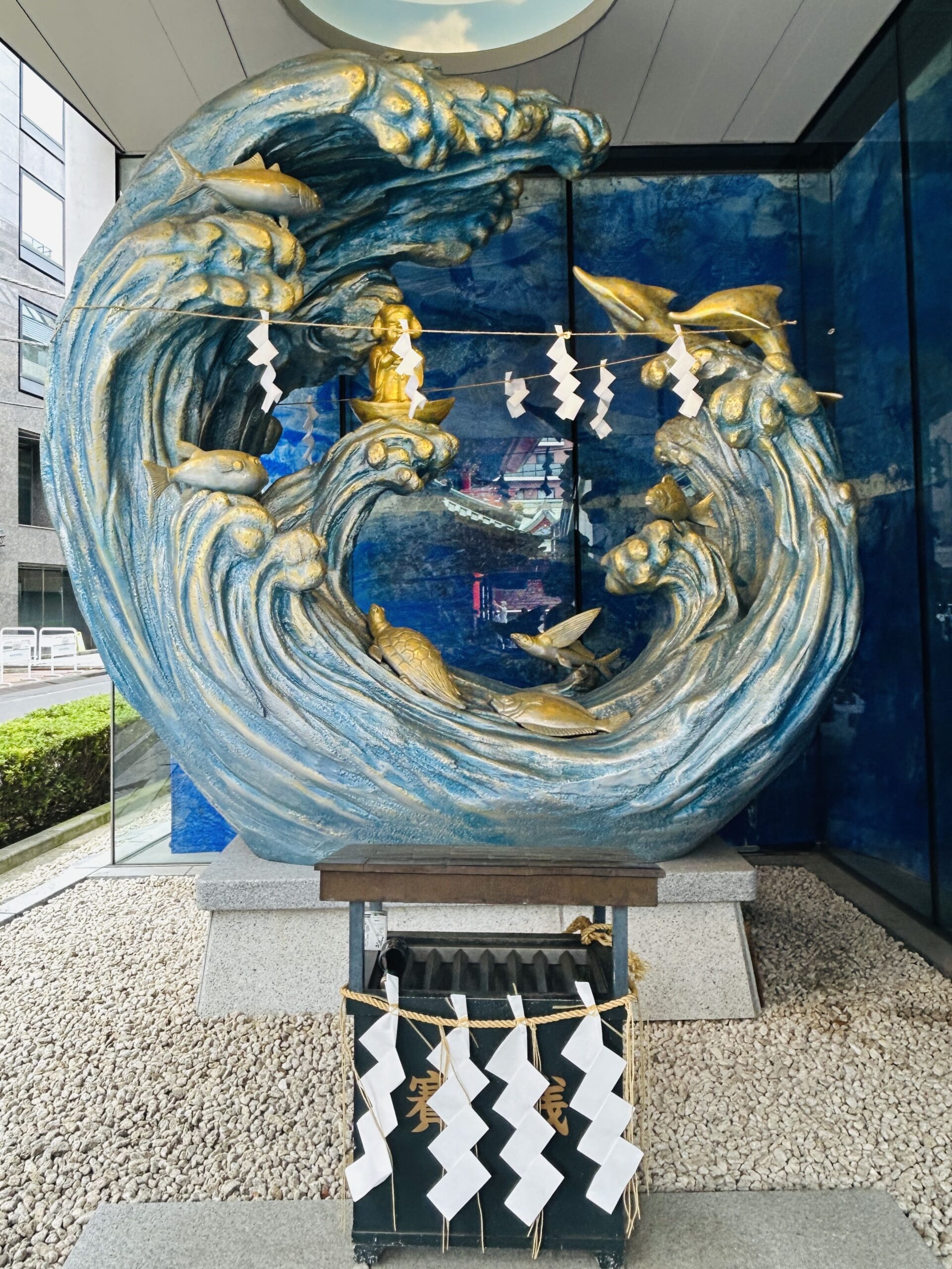
Hoping for the continued health and longevity of both my mother and my father—who has been supporting her—I sent them a photo of the beautiful statue of Sukunahikona-no-Mikoto (Ebisu-sama) that I encountered during a recent visit to Kanda Myojin Shrine.
Lately, I’ve come to feel that when I discover something truly wonderful—or something I think others might appreciate—I shouldn’t keep it to myself; instead, I want to share it with as many people as possible.
Whether young or old, I hope that people of all ages might have the chance to connect with this beautiful place—that is the sentiment behind this post.
I truly hope that this article and these photographs bring a little joy or happiness to someone!
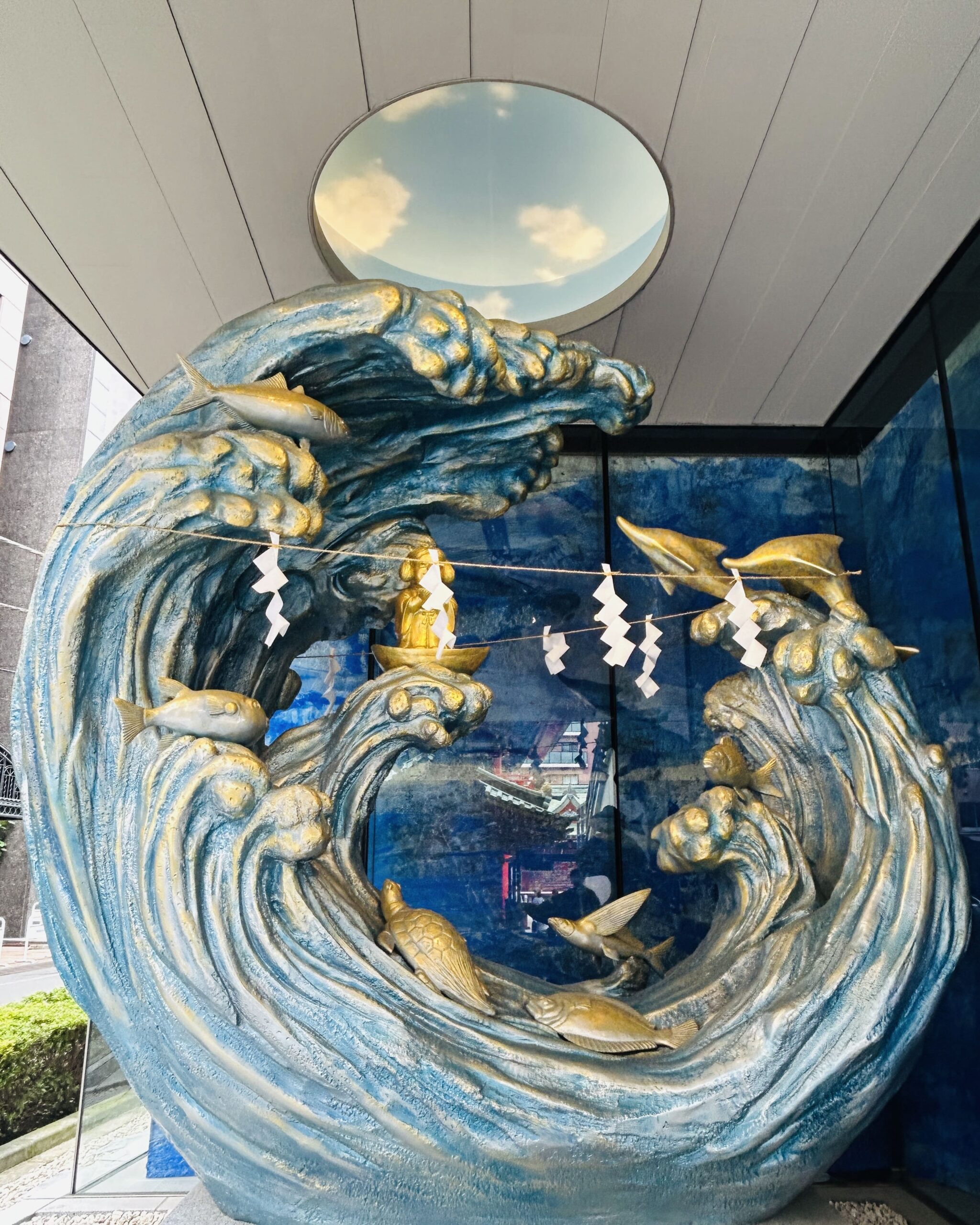
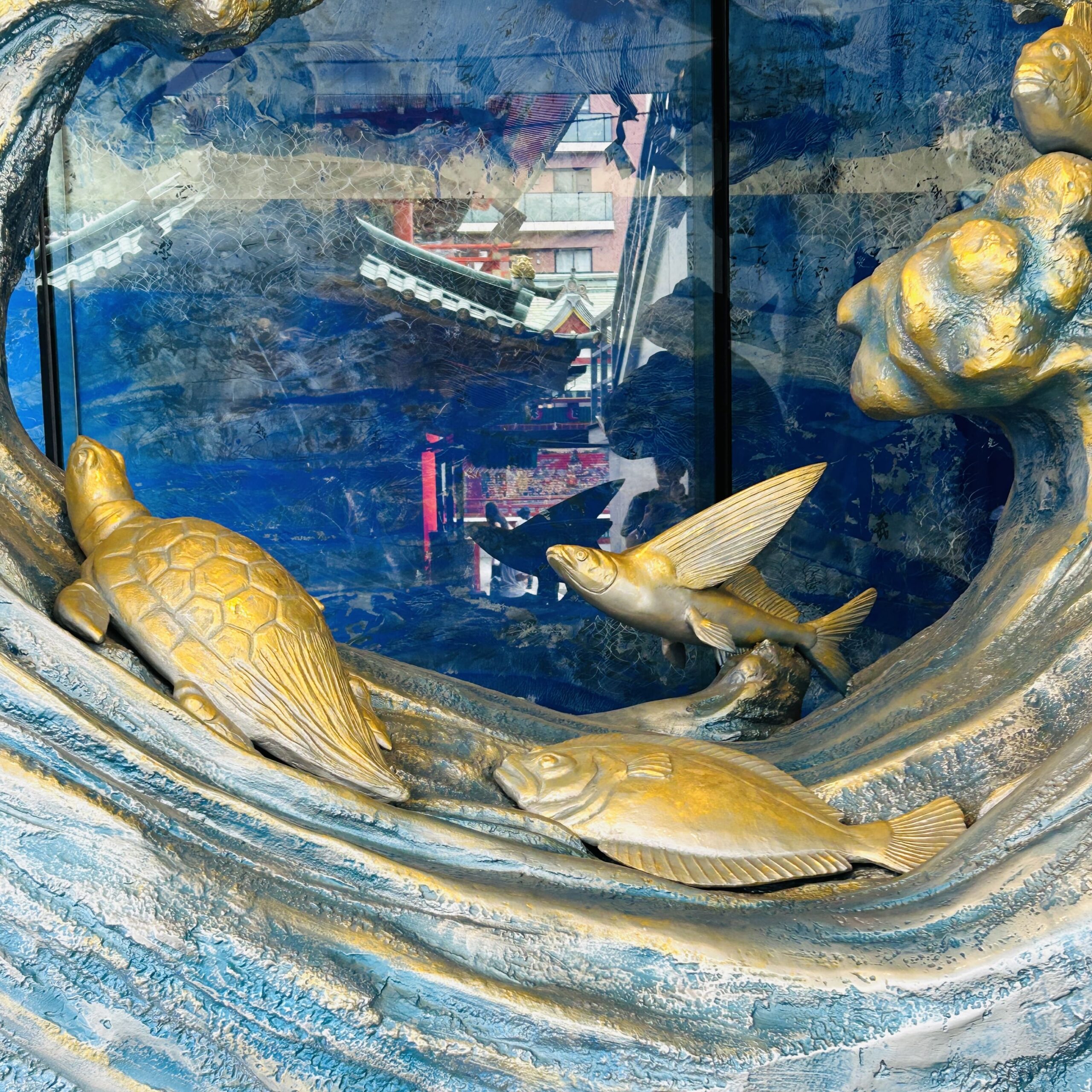
“Statue of Sukunahikona-no-Mikoto (Ebisu-sama)” by Ryohei Miyata × “Blue・Bleu・Blue” by Morio Matsui
What makes this art so intriguing is that it is not merely beautiful—it is a collaboration.
The work possesses such a seamless sense of unity that one would hardly guess it was created by two different artists; it is as if a deity had brought their individual pieces together.
Furthermore, it is wonderful that, in addition to the view of the sea, there is a skylight in the ceiling that looks out toward the sky.
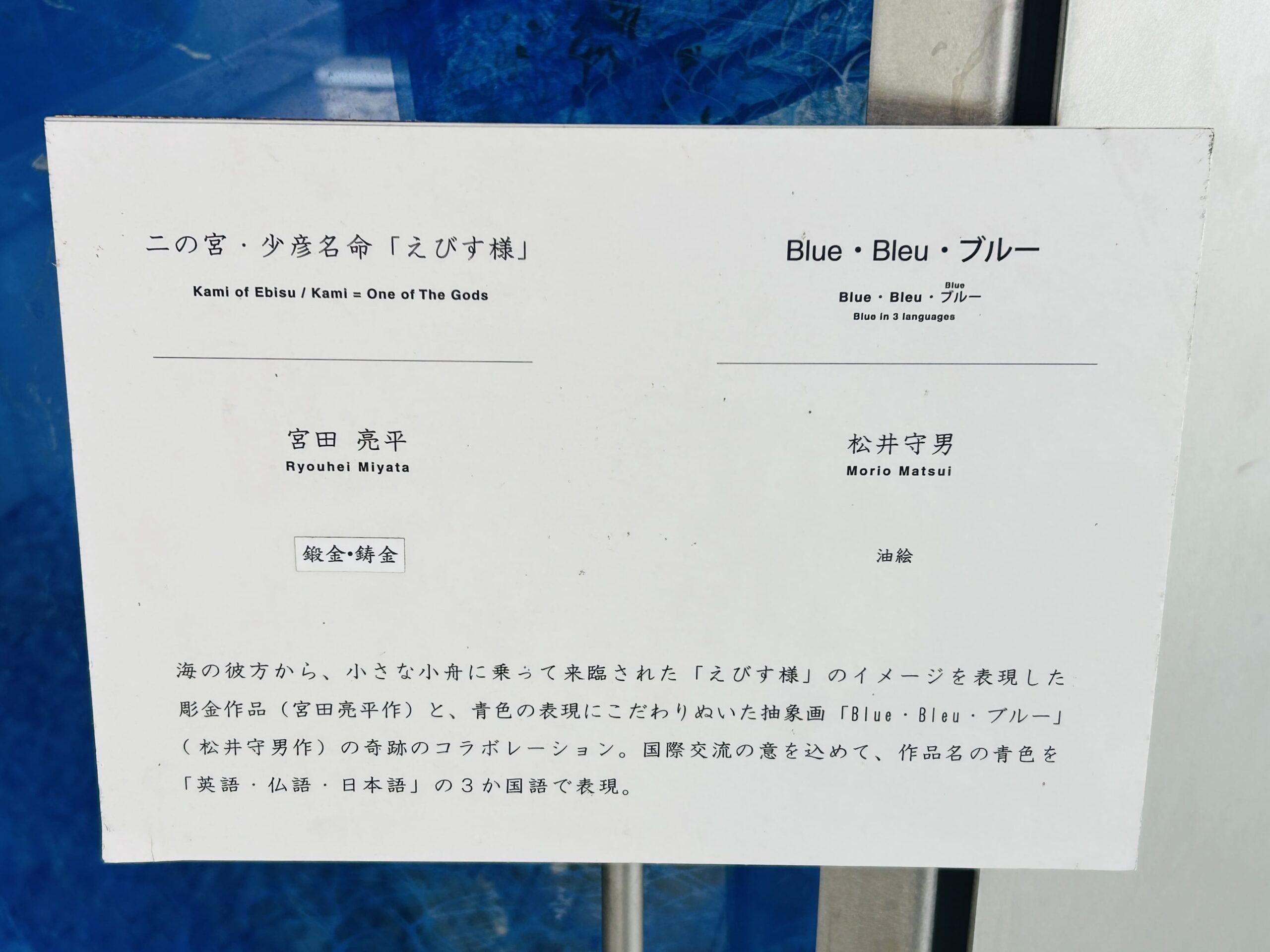
A miraculous collaboration between a metalwork piece by Ryohei Miyata—depicting the deity “Ebisu-sama” arriving from across the sea in a small boat—and an abstract painting titled “Blue/Bleu/ブルー” by Morio Matsui, a work defined by an uncompromising focus on the expression of the color blue.
Reflecting a spirit of international exchange, the title of the work—”Blue”—is presented in three languages: English, French, and Japanese.
*Cited from the on-site description of the works.
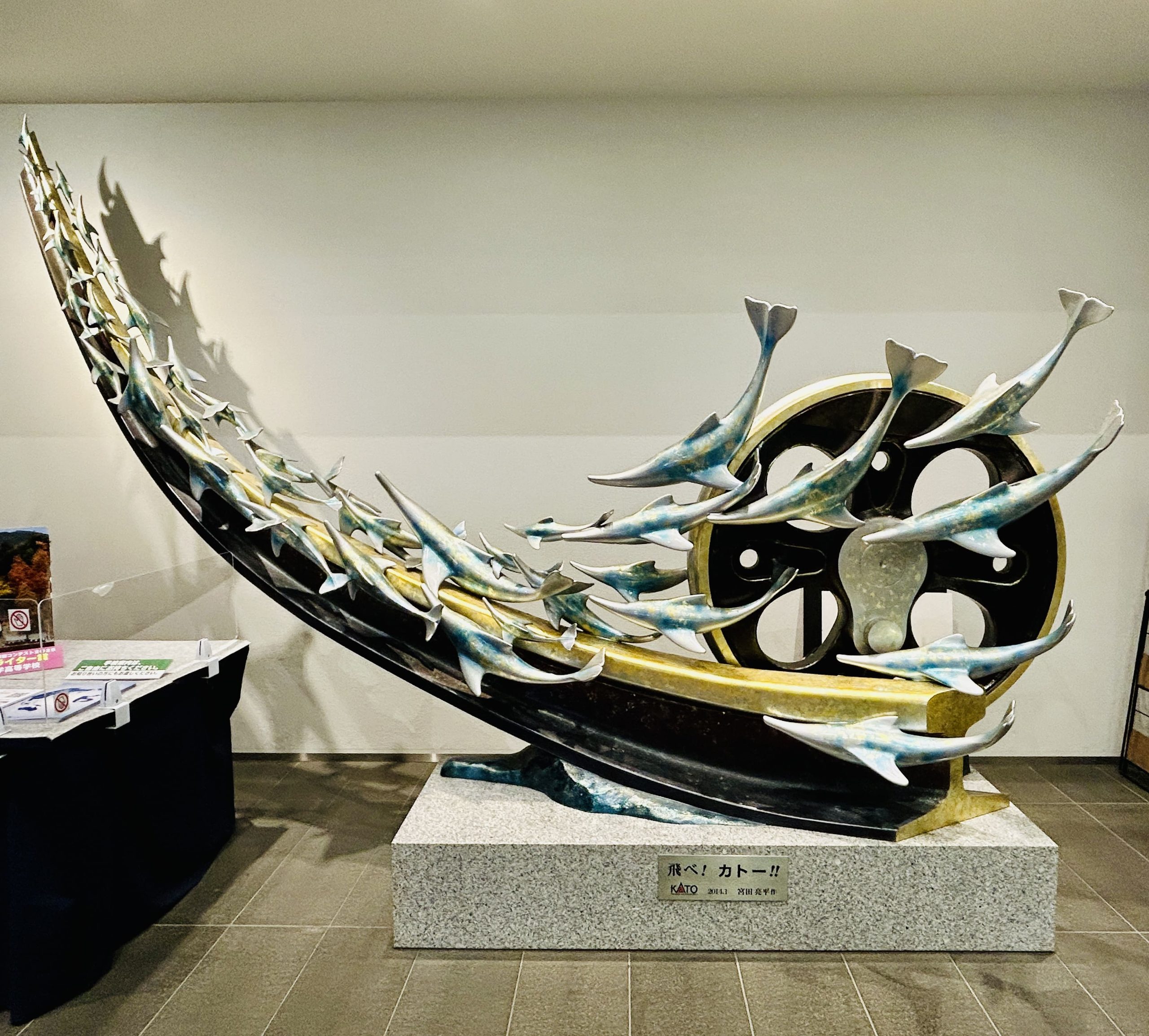
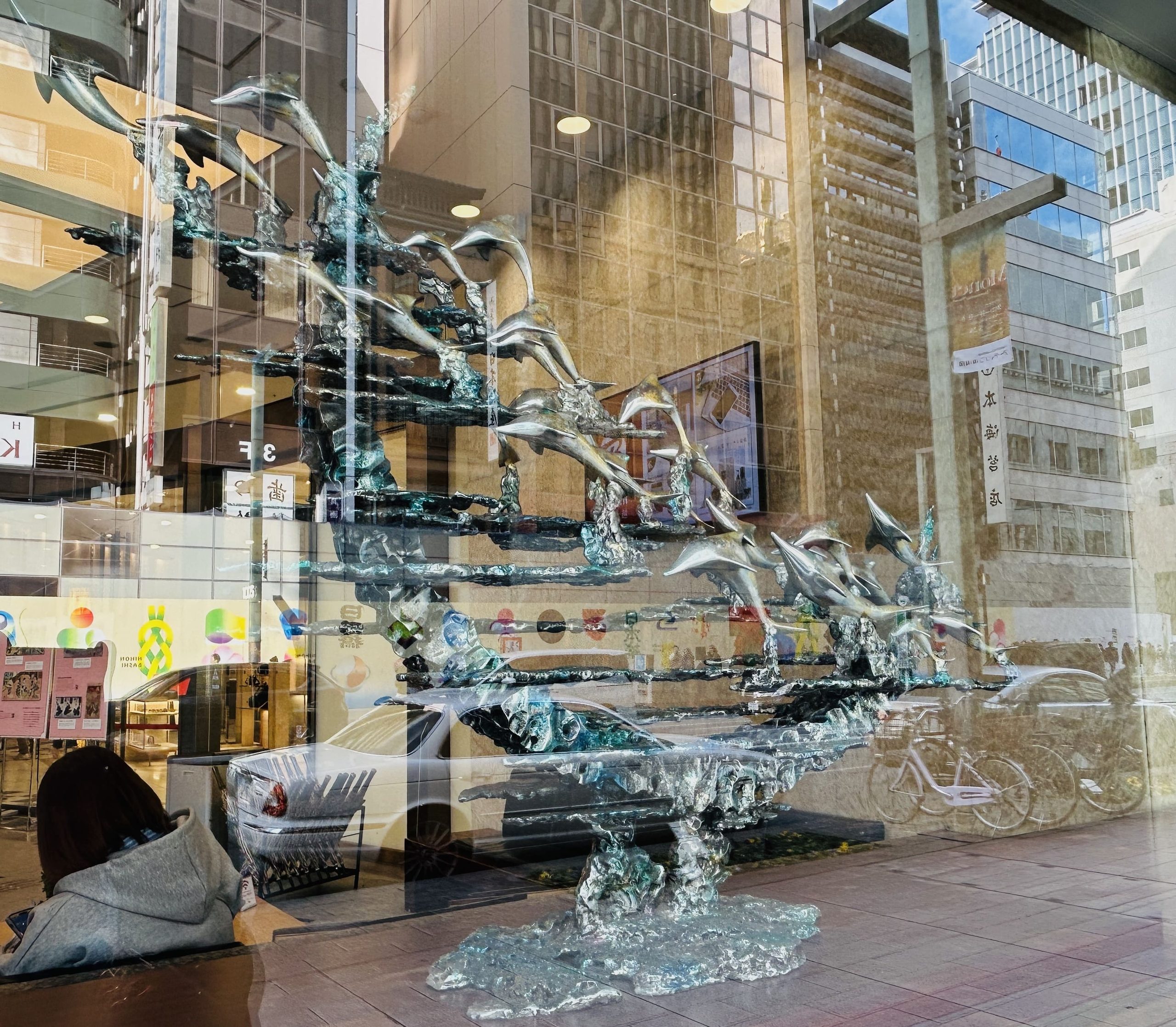
Shown below is the “Springen” series by Ryohei Miyata, who served as president of Tokyo University of the Arts for 10 years and subsequently as Commissioner for Cultural Affairs. Works by Ryohei Miyata can be seen in various locations throughout Tokyo.
Small, yet surprisingly powerful!
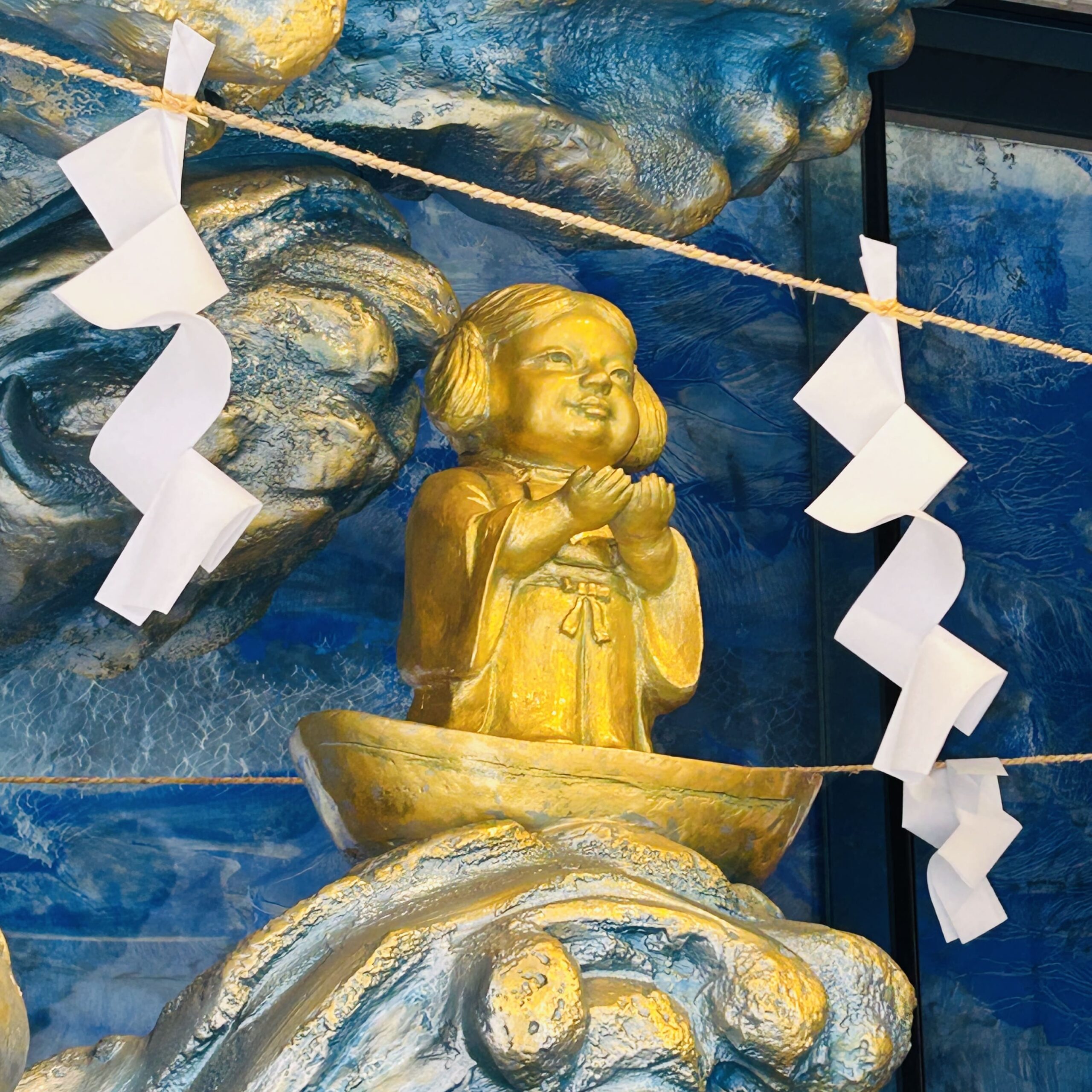
I wondered who this little deity might be, and upon checking the explanatory sign, I discovered it was Ebisu—one of the Seven Lucky Gods. Compared to the statue of Ebisu standing in front of Ebisu Station, or the gleaming golden one found at the Seiyu store in Ogikubo, this version is remarkably small and adorable.
The sign explains that Sukunahikona-no-Mikoto (identified here as Ebisu) is a deity of small stature who arrived from “Tokoyo-no-kuni”—a mystical realm beyond the sea. It notes that he joined forces with the great Daikoku-sama (Ōnamuchi-no-Mikoto) to help build the nation of Japan, and is revered as a god of national development and business prosperity. Despite his diminutive size, he is clearly a deity of immense power.
Small,
slender,
cute,
or even elderly—
I find myself wishing for a world filled with people—of all ages and backgrounds—who possess such inner strength and power.
As I gazed at this charming Ebisu, who seemed to radiate the promise of good fortune, I couldn’t help but see a reflection of my own mother—someone who, despite her advancing years, continues to carry herself with such remarkable spirit.
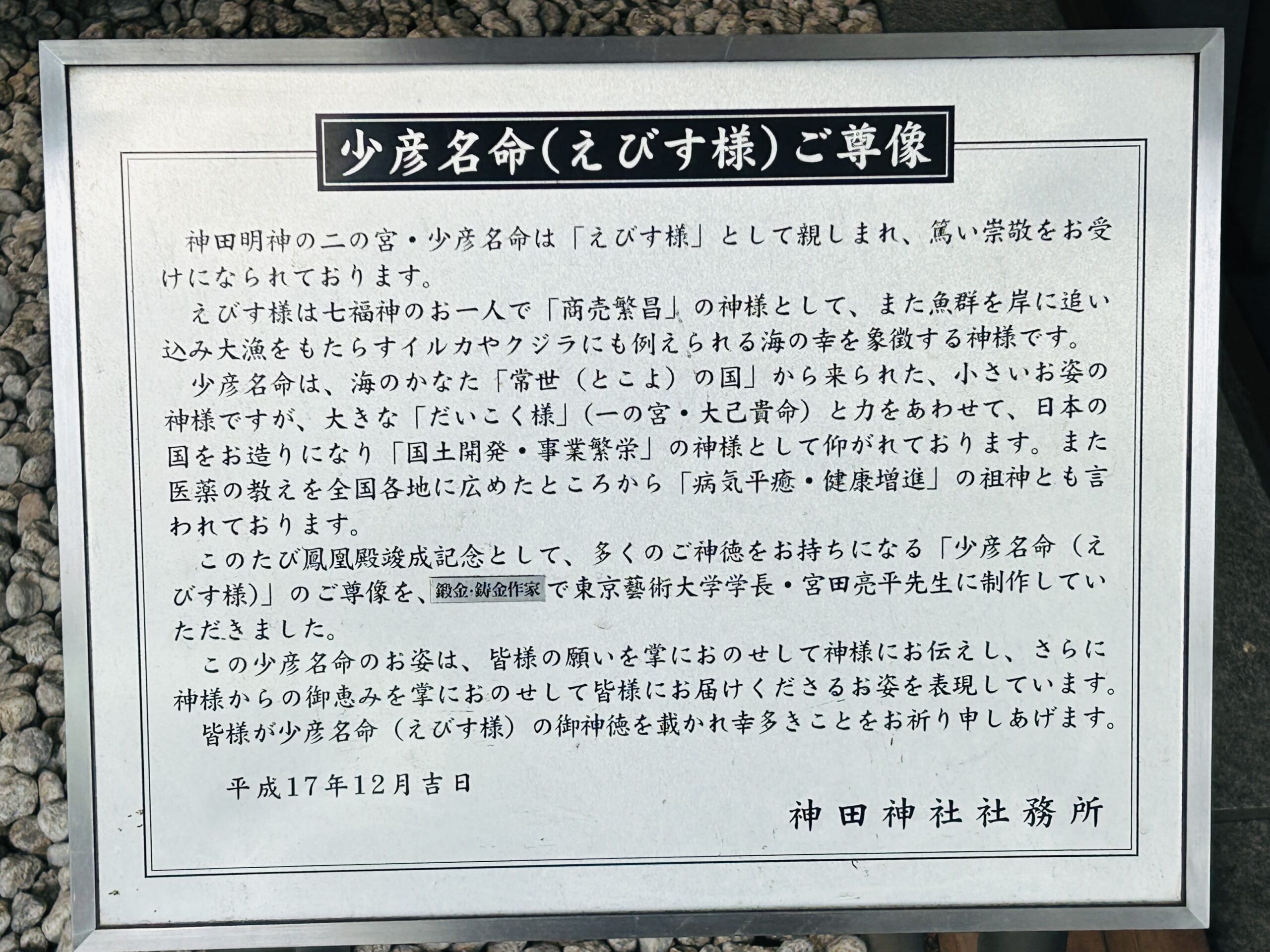
Statue of Sukunahikona-no-Mikoto (Ebisu-sama)
Sukunahikona-no-Mikoto, the deity enshrined at Kanda Myojin as the “second deity” (ni-no-miya), is affectionately known as “Ebisu-sama” and is held in deep reverence.
Ebisu-sama is one of the Seven Lucky Gods. He is revered as a deity of “prosperous business” and as a symbol of the bounty of the sea—often associated with dolphins and whales, which drive schools of fish toward the shore, bringing about a great catch.
Though small in stature, Sukunahikona-no-Mikoto arrived from “Tokoyo-no-kuni”—a mystical realm beyond the sea. Working in tandem with the great “Daikoku-sama” (the “first deity,” Oonamuchi-no-Mikoto), he helped shape the nation of Japan; thus, he is venerated as a deity of “national development and the prosperity of enterprises.” Furthermore, as he traveled throughout the country spreading the knowledge of medicine, he is also regarded as a founding deity of “healing and the promotion of good health.”
To commemorate the completion of the Ho-o-den (Phoenix Hall), a statue of the multi-faceted Sukunahikona-no-Mikoto (Ebisu-sama) was commissioned from Ryohei Miyata—a master of metal-hammering and casting, and President of the Tokyo University of the Arts.
The figure of Sukunahikona-no-Mikoto is depicted with his palms upturned—symbolizing the act of receiving the prayers of the faithful to present them to the divine, and in turn, holding the blessings of the gods to bestow upon the people.
We pray that you may receive the divine blessings of Sukunahikona-no-Mikoto (Ebisu-sama) and enjoy a life filled with good fortune.
December, 2005 — Kanda Shrine Administration Office
*Excerpted from the on-site description of the artwork.
コメント